How to run a Warzone Iri Invitational format that puts 50 Iridescents against streamers
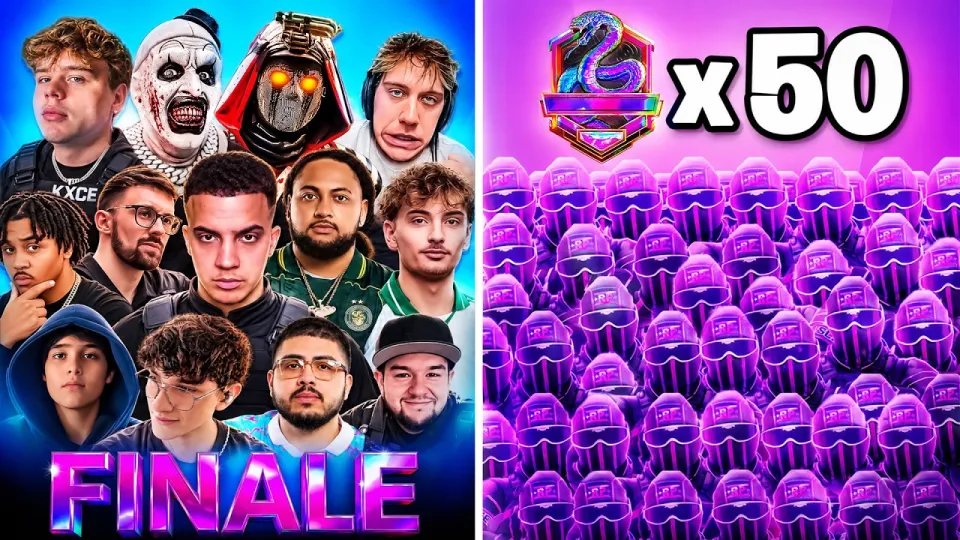
Video: Can 50 Iridescents Defeat STREAMERS? (FINALE)
You can order the same kind of articles for your own video to boost it on YouTube and Google. Just message the Telegram bot @sat_sit_bot. Articles with your video embedded are written and posted by the bot itself — on popular topical sites (no ads). Your first 50 articles are free.
· based on the channel Swagg
A Warzone Iri Invitational works by stacking a ranked solo custom lobby with roughly 50 Iridescent-ranked players against about 20 established streamers, running six games on Rebirth Island with a $2,000 prize on the line, and publishing every POV so viewers can follow any screen they want. The formula is simple to copy: pick a ranked mode, cap the lobby, seed it with recognizable names, and let the rank ladder answer the question of who actually deserves the spotlight. Swagg's channel built the finale around exactly that premise, and you can catch the host live at Swagg's Twitch channel.
What the Iri Invitational actually is and why the format works
The Iri Invitational is a community tournament built on a single question: can the top of the ranked ladder beat the creators who get the most screen time? Instead of inviting only known names, the event reserves most of the lobby for Iridescent players — the highest practical rank tier most competitors will ever grind to — and fills the rest with streamers whose reputations were built in public lobbies and content, not necessarily in ranked customs.
That mismatch is the entire appeal. A normal creator custom lobby is entertainment first: everyone knows everyone, fights are chaotic, and skill gaps are hidden behind personality. A ranked solo custom with 50 Iridescents changes the math. Every rotation, every third party, every early fight is contested by someone with a legitimate rank badge and something to prove. Streamers who usually dictate pace suddenly have to survive a lobby where half the players have better positioning habits than they do.
The finale ran six games across Rebirth Island, one of the smallest and most fight-dense Resurgence maps in Call of Duty: Warzone. Small maps matter for this format because they compress the lobby: fewer quiet minutes, more forced engagements, and a leaderboard that sorts itself out fast. Six games is also the right length — long enough for variance to fade, short enough that a single hot streak still matters.
How to set up a Warzone streamer vs Iridescent lobby
You can replicate the structure in a private custom match without a broadcast budget. The core requirements are a full lobby, a ranked ruleset, and a scoring sheet everyone can see.
- Choose the mode and map. Rebirth Island Resurgence ranked solo customs keep the lobby fast and force individual decision-making; squads formats spread the skill gap across teammates and dilute the point of the event.
- Cap and seed the lobby. Reserve the majority of slots for verified Iridescent players and a minority for creators. Invite more than you need — no-shows are guaranteed, and a half-empty custom lobby kills the tension.
- Publish the ruleset before game one. Weapon restrictions, kill limits, and any banned exploits should be posted in a shared document so nobody argues mid-series.
- Fix the scoring. Placement points plus elimination points, summed across all games, is the cleanest system; it rewards both survival and aggression and prevents one lucky hot drop from deciding the event.
- Run a check-in window. Give players a hard 15-minute check-in before the lobby opens, and keep two substitutes on standby.
- Record every POV. The all-POV release is what turns a private custom into content — the finale shipped each game as a separate timestamped block so viewers could jump between perspectives.
The roster, the money, and the names that carried the series
The first Iri Invitational put $2,000 up and pulled a deep list of competitors: Swagg, Shifty, Hisoka, JoeWo, Metaphor, Kxce, Diablo, Hero, Dongy, Kenner, Ketchup, Repullze, Saxzu, Lucky, and a long tail of Iridescent qualifiers. That mix is deliberate. Big creator names bring the audience; unknown Iridescents bring the credibility.
Metaphor drew consistent praise for shot quality and for using keyboard-and-mouse advantages intelligently — smoke plays specifically — in a lobby where controller players dominate the Resurgence meta. Ketchup's late-series pop-off became one of the most replayed moments. Dongy versus Metaphor produced the matchup viewers kept bringing up afterward. And Kenner became the series' lightning rod, with a dedicated segment in the finale asking outright whether he was cheating.
That last point is worth treating seriously rather than as drama. In a $2,000 event with public POVs, suspicion is inevitable, and the correct response is mechanical: require full VODs, run the footage past multiple experienced players, and state the outcome publicly. A format that invites unknown high-rank players has to accept that scrutiny comes with it.
Why the all-POV release is the real product
Publishing every perspective is what separates this series from a standard tournament broadcast. A single observer camera shows you the winner's story; twenty POVs let you audit the lobby. Viewers can watch a streamer get third-partied, then switch to the Iridescent who made the play, then check the minimap timing to see whether it was a read or luck.
For anyone building a similar event, the production lesson is straightforward: capture clean local recordings from every participant, normalize audio levels before release, and timestamp each game as its own chapter. The finale's structure — a short intro, then one block per game, with a short interstitial before the cheating discussion and the final game — is easy to reproduce and much easier to watch than a five-hour unedited stream dump.
Common questions about the streamer vs Iridescent format
Most of the debate around the series comes down to three things: who was missing, whether the ranked players got a fair shot, and how much a single suspicious performance should count.
On absences, viewers repeatedly asked about Biffle and Booya, two names associated with elite Resurgence play who did not appear in the finale. The honest answer is that a 50-slot lobby still has a finite guest list, and the natural next step is qualifiers — open brackets that let the missing names earn a slot instead of being argued about.
On fairness, the format is asymmetric by design. Iridescents outnumber streamers heavily, but streamers typically have more reps in custom lobbies and more experience playing for content rather than placement. Six games smooths that out somewhat; a longer series would favor the ranked grinders more.
On early exits, several prominent players left after rough starts, which drew criticism. If the event returns, a simple rule fixes it: prize eligibility requires playing all scheduled games, and substitutes fill vacated slots so the lobby stays full.
Useful links
- Swagg on Twitch — live Warzone streams and future invitationals
- FaZe Clan Nuke Squad merch — apparel from the host's shop
- Swagg's Discord — community, lobby announcements, and sign-ups
- Swagg on Twitter — event updates and results
- Swagg on Instagram — clips and behind-the-scenes posts
What the finale proves about Warzone competitive content
The Iri Invitational finale shows that Warzone's most watchable competitive format is not a polished broadcast but an audited lobby: real ranks, real money, and every POV on the record. Six games on Rebirth Island were enough to separate the players who could adapt from the ones who only perform in friendly customs, and the cheating conversation around one competitor proved that transparency is now part of the product rather than an afterthought. Swagg's channel deserves credit for building the structure — stacking 50 Iridescents against roughly 20 creators, attaching a $2,000 prize, and releasing the whole thing as one navigable archive. If you want to see the next one live, follow Swagg on Twitch and watch for the lobby announcement in Discord.
Key takeaways
- Format: Iridescent-ranked players versus established Warzone streamers in Rebirth Island ranked solo custom lobbies.
- Scale: roughly 50 Iridescent competitors against around 20 creator names, run across 6 games in the finale.
- Prize pool: $2,000 on the line in the first Iri Invitational.
- Broadcast: every POV was published together, so viewers could follow any player's screen.
- Roster depth: Swagg, Shifty, Hisoka, JoeWo, Metaphor, Kxce, Diablo, Dongy, Kenner, Ketchup and more.
Questions & answers
How many players competed in the Warzone Iri Invitational finale?
The finale stacked roughly 50 Iridescent-ranked players against about 20 established streamers across six games of Rebirth Island ranked solo customs. The full roster included Swagg, Shifty, Hisoka, JoeWo, Metaphor, Kxce, Diablo, Hero, Dongy, Kenner, Ketchup, Repullze, Saxzu and Lucky alongside Iridescent qualifiers.
What was the prize pool and how was it decided?
The first Iri Invitational carried a $2,000 prize pool, awarded based on cumulative performance across all six games rather than a single match. Placement and elimination points combined is the standard way to score a series like this, since it rewards both survival and aggression.
Why were Biffle and Booya missing from the lineup?
Neither appeared in the finale, which became one of the most common complaints in the comments. A 50-slot lobby has a fixed guest list, so the practical fix for future editions is open qualifiers that let missing elite names earn their way in instead of relying on invitations.
Was Kenner cheating, and how should organizers handle that kind of accusation?
The finale included a dedicated segment questioning Kenner's gameplay, and opinion in the community was split. The responsible process is mechanical rather than emotional: collect full POV recordings, have several experienced players review the footage, and publish a clear verdict — a format built on unknown high-rank players has to accept that scrutiny.
Source: Can 50 Iridescents Defeat STREAMERS? (FINALE) · Markdown version